
Delve into the world of home exteriors with this intriguing exploration of different materials, styles, colors, and finishes. Get ready to uncover the secrets behind creating the perfect facade for your dream home.
Types of Home Exteriors
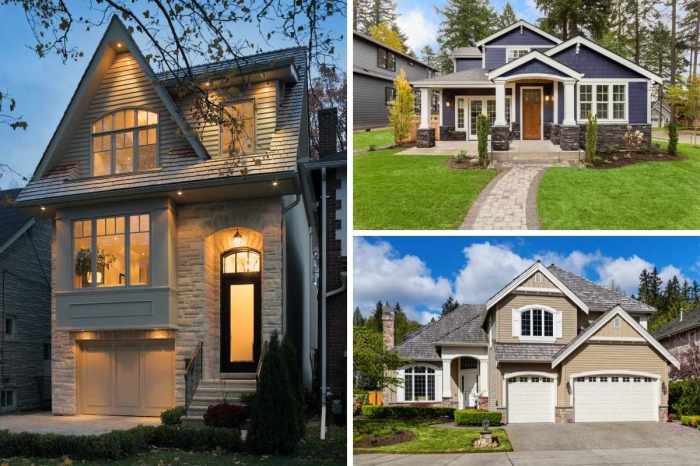
Home exteriors play a crucial role in the overall aesthetics and functionality of a house. They not only protect the interior from external elements but also contribute to the curb appeal and value of the property.
Materials Used for Home Exteriors
There are various materials commonly used for home exteriors, including:
- Brick: Known for its durability and classic appeal, brick exteriors are a popular choice for traditional homes.
- Wood: Provides a warm and natural look, but requires regular maintenance to prevent rot and decay.
- Vinyl: Affordable, low-maintenance, and available in a wide range of colors and styles.
- Stucco: Offers a sleek and modern finish, with excellent insulation properties.
- Stone: Adds a luxurious and timeless look to a home, but can be costly to install.
Traditional vs. Modern Home Exterior Styles
Traditional home exteriors often feature classic materials like brick or wood, with detailed architectural elements such as columns or gables. In contrast, modern home exteriors tend to focus on minimalist design, using materials like metal, glass, and concrete for a sleek and contemporary look.
Choosing the Right Exterior for a Home
When selecting an exterior for a home, it is essential to consider factors such as climate, maintenance requirements, budget, and architectural style. The chosen exterior should not only complement the overall design of the house but also withstand the elements and enhance its curb appeal.
Common Home Exterior Materials
Brick, wood, vinyl, stucco, and stone are some of the most popular materials used for home exteriors due to their durability and aesthetic appeal.
Brick
Brick is a classic choice for home exteriors, known for its timeless look and excellent durability. It offers natural insulation properties, fire resistance, and requires minimal maintenance. Examples of homes with brick exteriors can be found in traditional neighborhoods as well as modern designs.
Wood
Wood siding provides a warm and inviting look to a home, with options such as cedar, pine, and redwood. It can be painted or stained to match different architectural styles and offers a natural, rustic charm. However, wood requires regular maintenance to prevent rot, mold, and insect damage.
Vinyl
Vinyl siding is a cost-effective and low-maintenance option for home exteriors. It comes in a variety of colors and styles, offering versatility in design. Vinyl is resistant to rot, fading, and pests, making it a popular choice for modern homes with busy homeowners.
Stucco
Stucco is a cement-based material that provides a smooth, durable finish to home exteriors. It is versatile in terms of color and texture, allowing for customization to suit different architectural styles. Stucco is durable and requires minimal maintenance, but may crack over time and need repairs.
Stone
Stone exteriors exude luxury and elegance, adding a touch of sophistication to a home. Whether natural or manufactured, stone offers durability and a unique aesthetic appeal. Examples of homes with stone exteriors can be found in upscale neighborhoods or as accent features in modern designs.
Architectural Styles and Exterior Designs
When it comes to home exteriors, the architectural style plays a crucial role in determining the overall look and feel of a house. Different architectural styles like colonial, contemporary, craftsman, and modern have unique characteristics that influence the design of the exterior.
Colonial
Colonial architectural style is known for its symmetry, rectangular shape, and decorative elements such as columns and shutters. The exterior design often features a gabled roof, clapboard siding, and a central entrance with a pediment.
Contemporary
Contemporary homes feature clean lines, large windows, and a mix of materials like wood, glass, and metal. The exterior design is minimalistic and focuses on geometric shapes and asymmetrical facades.
Craftsman
Craftsman style homes are characterized by their low-pitched roofs, exposed rafters, and use of natural materials like wood and stone. The exterior design often includes tapered columns, dormer windows, and a covered front porch.
Modern
Modern architecture emphasizes simplicity, open spaces, and the use of industrial materials like concrete and steel. The exterior design of modern homes features flat roofs, large windows, and a minimalist aesthetic.
When choosing the right exterior design for your home, consider the architectural style of the house. Stay true to the key features of the style and incorporate elements that enhance its overall look and feel. Whether you prefer a classic colonial facade or a sleek modern exterior, aligning the design with the architectural style will create a harmonious and visually appealing home.
Color Schemes and Finishes
Choosing the right color scheme and finishes for a home exterior can significantly impact its overall appearance and curb appeal. The colors you select can convey a sense of style, personality, and even historical significance.
Impact of Colors on Home Exteriors
Colors play a crucial role in defining the character of a home. Lighter shades can make a house appear more spacious and welcoming, while darker hues can add drama and sophistication. Additionally, the right color choice can complement the architectural style of the home and its surroundings.
Choosing the Right Color Scheme
When selecting a color scheme for your home exterior, consider factors such as the architectural style, neighborhood norms, landscaping, and personal preferences. It's essential to test paint samples on different areas of the house to see how they look in various lighting conditions before making a final decision.
Significance of Finishes
Finishes like matte, glossy, textured, and metallic can add depth and visual interest to a home's exterior. Matte finishes create a subtle and understated look, while glossy finishes reflect light and create a sleek appearance. Textured finishes can mimic natural materials like wood or stone, adding warmth and authenticity.
Metallic finishes offer a modern and sophisticated touch.
Trends in Exterior Color Schemes and Finishes
- Monochromatic Color Schemes: Minimalist and modern homes often opt for monochromatic color schemes, using varying shades of a single color for a cohesive look.
- Contrasting Accents: Adding a pop of color through contrasting accents on doors, shutters, or trim can create visual interest and highlight architectural features.
- Natural Finishes: Embracing natural finishes like wood stains or stone textures is a popular trend that brings warmth and texture to a home's exterior.
Conclusion
In conclusion, understanding the nuances of home exteriors is key to enhancing the overall look and feel of your house. With the right knowledge, you can transform your home's exterior into a true masterpiece that reflects your personal style.
FAQ Corner
What are the key factors to consider when choosing a home exterior?
Consider factors such as durability, maintenance requirements, architectural style, and personal preferences when selecting a home exterior.
How do different architectural styles influence home exterior designs?
Architectural styles play a crucial role in determining the overall look and feel of a home's exterior, influencing aspects like materials, colors, and finishes.
What are some popular trends in exterior color schemes?
Current trends include earthy tones, monochromatic palettes, and bold accent colors that add a touch of modernity to home exteriors.
What are the main characteristics of materials like wood, vinyl, and stucco commonly used for home exteriors?
Wood offers a classic look, vinyl is low maintenance, and stucco provides a textured finish, each with unique benefits for home exteriors.